Evidence-based, parent-tested. References guidelines from the AAP, CDC, and WHO.
Informational only, not medical advice. Always consult your pediatrician about your baby's specific needs.
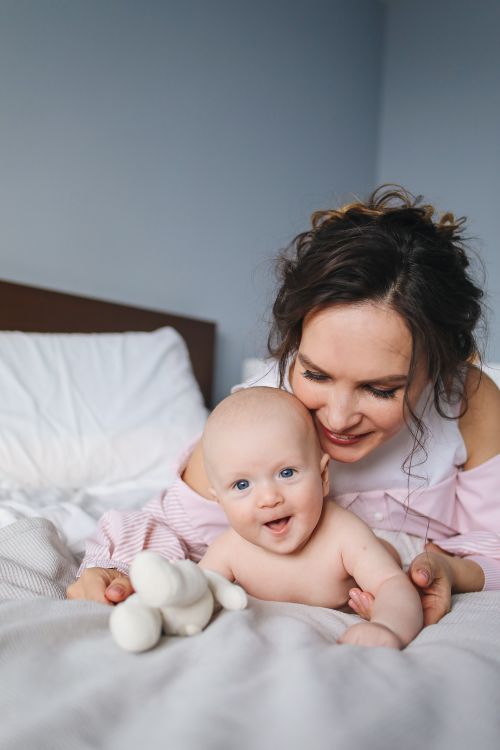
Long before your baby speaks their first word or takes their first step, they are already engaged in the most complex work of early life: building relationships. From the moment of birth, babies are wired for connection. They study faces, respond to voices, and communicate through cries, coos, and eventually those heart-melting first smiles.
Social and emotional development is the foundation upon which all other learning is built. A baby who feels safe, loved, and understood is a baby whose brain is optimally primed for exploring the world. This guide explores the science of how babies develop socially and emotionally, and how your everyday interactions shape these critical skills.
📌 Key Takeaway: According to the AAP, developmental milestones occur in predictable patterns, but normal range can vary by 4-6 months. This guide gives you evidence-based, practical guidance you can apply today. For a related deep dive, see our guide on baby brain development nutrition.
Attachment Theory: The Science of Bonding
John Bowlby’s Attachment Theory
British psychiatrist John Bowlby revolutionized our understanding of parent-child relationships with his attachment theory, developed in the 1950s and 1960s. Bowlby proposed that infants are biologically programmed to seek proximity to a primary caregiver as a survival mechanism. This drive to attach is not learned — it is innate.
Bowlby’s key principles include:
- Monotropy: Infants have an innate need to form a primary attachment to one main figure (though they can and do form additional attachments)
- Critical period: The first 2-3 years are especially important for forming secure attachments
- Internal working model: Early attachment experiences create a mental template for all future relationships
- Safe haven and secure base: The caregiver serves as a refuge during distress (safe haven) and a launching pad for exploration (secure base)
Mary Ainsworth’s Strange Situation
Developmental psychologist Mary Ainsworth expanded Bowlby’s work through her groundbreaking “Strange Situation” experiments in the 1970s. She identified distinct attachment patterns based on how babies responded to separation from and reunion with their caregivers:
| Attachment Style | Percentage of Babies | Characteristics | Caregiver Pattern |
|---|---|---|---|
| Secure | ~60-65% | Distressed at separation, easily comforted upon reunion, uses caregiver as secure base | Responsive, consistent, attuned |
| Insecure-Avoidant | ~20-25% | Shows little distress at separation, avoids caregiver upon reunion | Emotionally unavailable, dismissive of needs |
| Insecure-Ambivalent | ~10-15% | Highly distressed at separation, difficult to comfort upon reunion, clingy and angry | Inconsistent responsiveness |
| Disorganized | ~5-10% | No coherent strategy; contradictory behaviors (approaching while looking away) | Frightening or frightened behavior |
Research consistently shows that secure attachment predicts better outcomes across virtually every domain of development — academic performance, social skills, emotional regulation, physical health, and even longevity.
How to Build Secure Attachment
The good news is that building secure attachment does not require perfection. Research by psychologist Edward Tronick suggests that parents only need to be “in sync” with their baby about 30-50% of the time. What matters most is the pattern of rupture and repair — when misattunement occurs, you notice and correct it.
Key Practices for Secure Attachment
- Respond promptly to cries: In the first year, you cannot spoil a baby. Prompt responses teach your baby that the world is safe and their needs matter.
- Follow your baby’s lead: Watch for cues — turning toward you means “engage me,” looking away means “I need a break.”
- Engage in face-to-face interaction: Get on your baby’s level and share moments of mutual delight.
- Narrate your actions: “I hear you crying. Let me pick you up. There, does that feel better?”
- Be physically affectionate: Hold, cuddle, rock, and carry your baby frequently.
- Maintain routines: Predictable patterns help babies feel secure.
- Repair after misattunements: When you misread a cue or respond with frustration, circle back with comfort.
Social and Emotional Milestones by Age
Birth to 2 Months: The Reflexive Period
- Prefers human faces to other visual stimuli
- Calms when held or when hearing a familiar voice
- Begins to show a social smile — typically around 6-8 weeks, this is one of the first true social behaviors
- Makes eye contact during feeding and caregiving
- Cries to communicate needs (hunger, discomfort, overstimulation)
- Responds to touch with relaxation or increased alertness
The social smile, which typically emerges between 6 and 8 weeks, is a landmark moment. Unlike earlier reflexive smiles that occur during sleep, the social smile is a deliberate response to another person’s face or voice. It represents the very first instance of your baby intentionally communicating positive emotion.
2 to 4 Months: Growing Social Awareness
- Smiles spontaneously and in response to others
- Begins to laugh — usually around 3-4 months
- Enjoys social play and may cry when play stops
- Imitates some facial expressions — early mirroring behavior
- Distinguishes familiar from unfamiliar people
- Coos and vocalizes to engage caregivers in “conversation”
4 to 6 Months: Emotional Expression Expands
- Shows a wider range of emotions: joy, anger, sadness, surprise, fear
- Responds to the emotions of others — may become upset when another baby cries
- Enjoys looking at self in mirror
- Reaches for familiar people
- Shows displeasure when a toy is taken away
- Begins to differentiate between friendly and angry tones of voice
6 to 9 Months: Stranger Anxiety and Social Referencing
- Stranger anxiety emerges — wariness or distress around unfamiliar people
- Separation anxiety begins — clings to caregiver and protests departure
- Social referencing develops — looks to parent’s face to gauge how to react to new situations
- Shows clear preferences for certain people and toys
- Plays simple interactive games (peek-a-boo, pat-a-cake)
- Uses gestures to communicate (reaching arms up to be held)
Social referencing is a particularly important milestone. When your baby encounters something new — an unfamiliar person, a strange toy, a loud noise — they look to your face for information. Your expression tells them whether to be afraid or curious. This is why your calm, reassuring presence in new situations is so powerful.
9 to 12 Months: The Communicative Revolution
- Points to show interest (protodeclarative pointing) and to request items (protoimperative pointing)
- Joint attention develops — follows your gaze and shares attention to objects
- Shows affection openly — hugs, kisses, pats
- Tests parental responses to behavior (early boundary-testing)
- May show anxiety in new situations but uses caregiver as secure base
- Begins to cooperate with dressing (holds out arm for sleeve)
12 to 18 Months: The Emerging Self
- Shows possessiveness over toys (“Mine!”)
- Engages in parallel play — plays alongside other children but not interactively with them
- Shows empathy in primitive form — may offer a toy to a crying child
- Becomes more assertive — expresses preferences clearly
- Temper tantrums begin as desires outpace communication skills
- Demonstrates separation protest but can be comforted by familiar caregivers
18 to 24 Months: Social and Emotional Complexity
- Self-recognition emerges — recognizes self in mirror and photographs
- Begins to use emotional language — “happy,” “sad,” “scared”
- Shows defiance — says “no” and tests limits (a healthy sign of autonomy development)
- Demonstrates more sophisticated empathy — may try to comfort someone who is sad
- Engages in early interactive play — though parallel play still dominates
- Shows pride in accomplishments — claps for self, seeks approval
- Begins to understand simple rules — though following them is inconsistent
Understanding Temperament
Not all babies respond to the world in the same way, and that is perfectly normal. Pioneering researchers Alexander Thomas and Stella Chess identified three broad temperament types in the 1950s that remain widely referenced today:
Easy Temperament (approximately 40% of babies)
- Generally positive mood
- Adapts quickly to new situations and routines
- Regular biological patterns (eating, sleeping)
- Mild to moderate emotional reactions
- Approaches new experiences with curiosity rather than fear
Difficult Temperament (approximately 10% of babies)
- Intense emotional reactions (both positive and negative)
- Irregular biological patterns
- Slow to adapt to changes
- Often negative initial response to new situations
- Requires more patience and consistency from caregivers
Slow-to-Warm Temperament (approximately 15% of babies)
- Initially cautious or withdrawn in new situations
- Low activity level
- Mildly negative responses to novelty that gradually become more positive with repeated exposure
- Needs extra time and gentle encouragement
The remaining 35% of babies show a combination of traits that do not fit neatly into one category.
The Goodness of Fit Model
Thomas and Chess also proposed the goodness of fit concept: what matters most is not the temperament itself, but how well the caregiving environment matches the child’s needs. A high-energy, intense baby may thrive with a parent who provides structure and calm. A slow-to-warm baby may flourish with gentle, patient introductions to new experiences.
No temperament is better or worse — each has strengths. Understanding your baby’s temperament helps you adjust your parenting approach for the best fit.
Self-Regulation Development
Self-regulation — the ability to manage emotions, attention, and behavior — is one of the most important skills of early childhood, and its development begins in infancy.
How Self-Regulation Develops
| Age | Regulation Strategy | Parent’s Role |
|---|---|---|
| 0-3 months | Dependent on caregiver for all regulation (being held, rocked, fed) | Respond promptly; you are the external regulator |
| 3-6 months | Begins self-soothing (sucking thumb, looking away from overstimulation) | Allow brief self-soothing attempts before intervening |
| 6-12 months | Uses transitional objects; seeks caregiver deliberately; can wait briefly | Provide comfort objects; narrate emotions |
| 12-18 months | Beginning to follow simple rules; can redirect attention with help | Model emotional language; set gentle limits |
| 18-24 months | Uses words to express some emotions; follows simple routines independently | Validate emotions; teach coping strategies; be patient with tantrums |
Co-regulation: The Bridge to Self-Regulation
Before babies can regulate their own emotions, they rely on co-regulation — the process by which a calm, attuned caregiver helps modulate a baby’s emotional state. When you pick up a crying baby and speak softly, your calm nervous system helps regulate their distressed one. Over hundreds of these interactions, babies gradually internalize the ability to calm themselves.
This is why responsive parenting is not “spoiling” — it is teaching the brain how to manage stress.
Parallel Play vs. Interactive Play
Parents often wonder why their toddler seems to ignore other children at playgroups. This is completely normal and reflects a predictable developmental progression:
- Solitary play (birth-2 years): Baby plays alone, unaware of or uninterested in other children’s activities
- Onlooker play (around 2 years): Watches other children play without joining
- Parallel play (2-3 years): Plays alongside other children with similar materials but without interaction
- Associative play (3-4 years): Begins to interact with other children during play, sharing materials
- Cooperative play (4+ years): True collaborative play with shared goals and role assignment
Parallel play is not a sign of social deficits — it is a developmentally appropriate stage. Toddlers are learning by observing others and practicing social proximity before they are ready for the complex negotiation that interactive play requires.
How Responsive Parenting Shapes Development
Decades of research have demonstrated that responsive parenting — consistently noticing, interpreting, and responding to a baby’s cues — has measurable effects on brain development:
- Reduced stress hormones: Babies with responsive caregivers show lower cortisol levels during stressful situations
- Larger hippocampus: A 2012 study published in PNAS found that children of nurturing mothers had hippocampal volumes 10% larger than those of less responsive mothers
- Better emotional regulation: Securely attached children show more effective emotional coping strategies throughout childhood
- Stronger social skills: Early secure attachment predicts better peer relationships in preschool and beyond
- Higher academic achievement: The emotional security provided by responsive caregiving creates the cognitive foundation for learning
What Responsive Parenting Looks Like in Practice
- During feeding: Making eye contact, talking softly, following the baby’s hunger and fullness cues
- During diaper changes: Narrating what you are doing, making it a moment of connection rather than just a task
- During distress: Picking up the baby, speaking soothingly, trying to identify and address the source of discomfort
- During play: Following the baby’s interests, matching their energy level, knowing when to engage and when to step back
- During bedtime: Creating calm, predictable routines that signal safety
When to Seek Professional Guidance
While social and emotional development varies widely among healthy babies, certain signs may warrant discussion with your pediatrician:
- No social smile by 3 months
- No eye contact or reduced eye contact by 3-4 months
- Does not respond to own name by 9 months
- No pointing or gesturing by 12 months
- No joint attention (sharing gaze between an object and a person) by 12 months
- Loss of social skills that were previously present
- Extreme distress that cannot be soothed by any caregiver
- No interest in other children by 18-24 months
- Complete lack of pretend play by 24 months
Early identification and intervention for social-emotional concerns can make a significant difference in outcomes. If you have concerns, trust your instincts and speak with your child’s healthcare provider.
Frequently Asked Questions
What is the most important thing I can do for my baby’s social and emotional development?
The single most impactful thing you can do is practice responsive caregiving — consistently noticing and responding to your baby’s cues. This does not mean being perfect or responding instantly to every whimper. Research shows that being “in sync” with your baby about 30-50% of the time, with consistent repair after misattunements, is sufficient to build secure attachment. Prompt responses to cries in the first year, physical affection, face-to-face interaction, and narrating your actions all contribute to a strong emotional foundation.
Can you spoil a baby by holding them too much?
No. Research consistently shows that you cannot spoil a baby in the first year of life by responding to their needs. Babies who are held frequently and responded to promptly actually become more independent and confident over time, not less. Responsive caregiving in infancy builds the secure attachment that gives children the confidence to explore independently later. The idea that attending to a baby’s needs creates dependence is not supported by developmental science.
My baby has a “difficult” temperament. Does this mean something is wrong?
Not at all. Temperament is a normal variation in how babies experience and respond to the world. Babies labeled as having a “difficult” temperament are often intense, passionate, and persistent — traits that can be tremendous strengths later in life. What matters most is the “goodness of fit” between your baby’s temperament and your parenting approach. A high-intensity baby may need more structure, patience, and calm environments. Work with your baby’s temperament rather than against it, and consult your pediatrician if you feel overwhelmed.
When should babies start playing with other children?
Babies naturally progress through stages of social play. Before age 2, most children engage in solitary or parallel play — playing alongside other children without direct interaction. True cooperative play does not typically develop until age 4 or later. Providing opportunities for your baby to be around other children is beneficial for observation and social exposure, but do not expect or force interactive play before your child is developmentally ready. Playgroups and social settings are still valuable even when children appear to be “ignoring” each other.
How does postpartum depression affect my baby’s social and emotional development?
Postpartum depression can affect the quality of parent-infant interactions, potentially impacting a baby’s social and emotional development. Research shows that babies of mothers with untreated postpartum depression may show differences in emotional regulation and social engagement. However, the key word is “untreated.” Seeking help for postpartum depression — through therapy, medication, or both — is one of the most important things you can do for both yourself and your baby. With appropriate treatment and support, parents can absolutely build strong, secure attachments with their children.
💡 Related Resources: Expecting? Visit our sister site pregnancy.chparenting.com for week-by-week pregnancy guides, prenatal nutrition, and labor preparation.
References
- American Academy of Pediatrics. “Social Development in Children.” https://www.healthychildren.org/English/ages-stages/baby/Pages/Emotional-and-Social-Development-Birth-to-5-Months.aspx
- Centers for Disease Control and Prevention. “Positive Parenting Tips.” https://www.cdc.gov/ncbddd/childdevelopment/positiveparenting/index.html
- Bowlby, J. (1969). Attachment and Loss: Vol. 1. Attachment. Basic Books.
- Ainsworth, M. D. S., Blehar, M. C., Waters, E., & Wall, S. (1978). Patterns of Attachment. Lawrence Erlbaum Associates.
- Thomas, A., & Chess, S. (1977). Temperament and Development. Brunner/Mazel.
- Luby, J. L., et al. (2012). “Maternal Support in Early Childhood Predicts Larger Hippocampal Volumes at School Age.” Proceedings of the National Academy of Sciences, 109(8), 2854-2859. https://www.pnas.org/doi/10.1073/pnas.1118003109
- Zero to Three. “Social-Emotional Development.” https://www.zerotothree.org/key-topics/social-and-emotional-development/
- Tronick, E. (2007). The Neurobehavioral and Social-Emotional Development of Infants and Children. W. W. Norton.

Written by
Vega LinFounder & Editor — Mother of 2 (Taiwan)
Vega writes Baby Care Guide from the intersection of evidence-based research (AAP, CDC, WHO) and real parenting experience. Completing her Master's in Digital Innovation at Tunghai University. Read more →
Related articles
Planning baby #2? Visit our pregnancy guide.
Due date calculators, week-by-week tracking, weight gain guides, and expert articles for every trimester of your pregnancy journey.
Visit Pregnancy Guide →